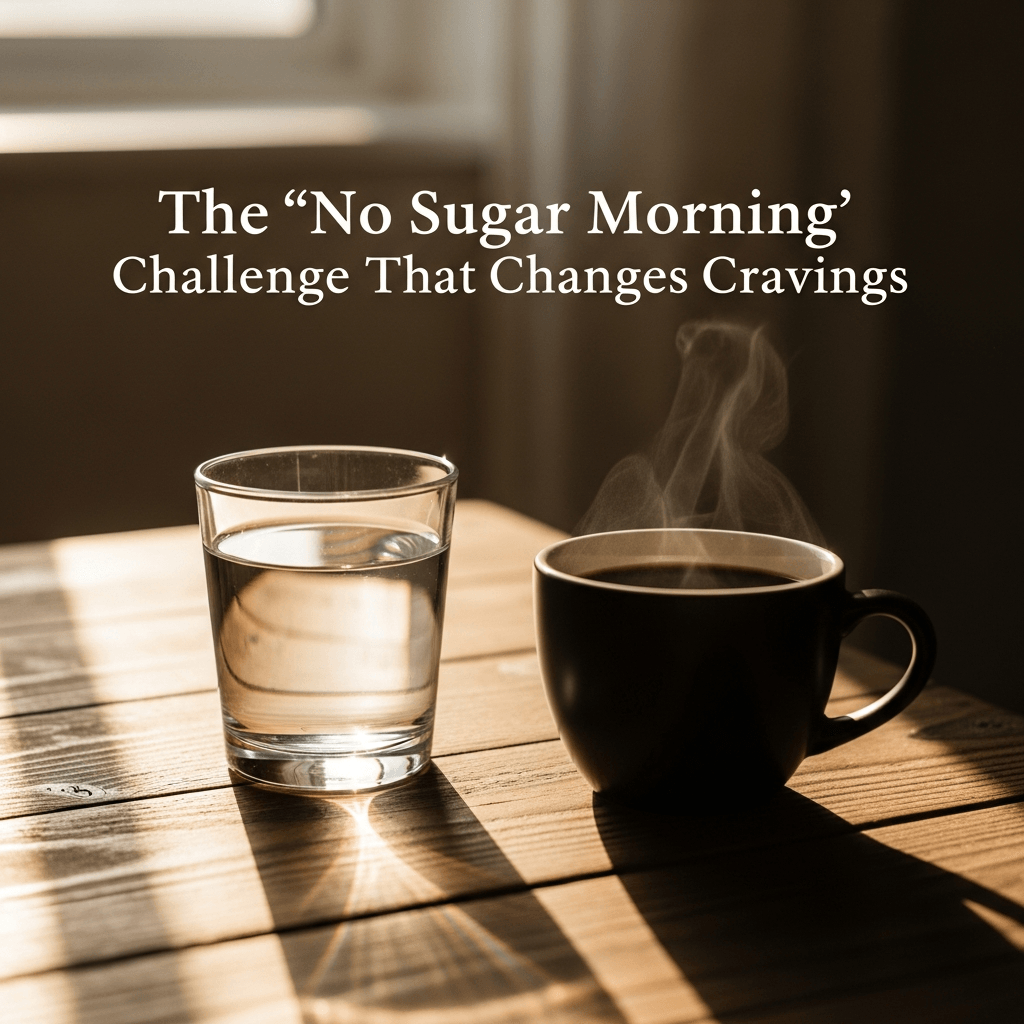
Most people aren’t tired — they’re just dehydrated.
But instead of another “drink eight glasses a day” lecture, here’s a rule so simple it feels almost stupid: one cup, one cue.
No counting, no tracking, no guilt — just a rhythm your body understands.
The One Cup Rule is hydration stripped down to its core: clarity through simplicity.
And science says it works better than any wellness app ever could.
Why Hydration Isn’t About Water — It’s About Rhythm
Hydration isn’t a numbers game; it’s a timing game.
Your body doesn’t need massive water dumps — it needs consistent, steady replenishment.
According to Dr. Dana Cohen, co-author of Quench, your cells absorb water more efficiently when intake is rhythmic, not random.
“Small, steady hydration signals safety to the body. It’s not about more — it’s about consistency.”
That’s why the One Cup Rule works — it aligns with your body’s natural rhythm, not your to-do list.
The Energy Crisis You Can’t Feel
Mild dehydration (as little as 1–2% of body weight) can drop your focus, mood, and alertness dramatically.
A Journal of Nutrition study found that even mild dehydration increases fatigue and anxiety — before you feel thirsty.
That’s the trap: by the time your brain asks for water, it’s already underperforming.
And what do most of us do? Reach for caffeine, snacks, or screens — short-term hits that dig the dehydration hole deeper.
The One Cup Rule Explained
Here’s the rule that rewires it all:
Every time you change what you’re doing, drink one cup of water.
That’s it.
Waking up? One cup.
Before coffee? One cup.
After a meeting, meal, or scroll session? One cup.
It’s not about quantity — it’s about pattern.
You’re training your body to associate transitions with hydration, turning it from a chore into an automatic reflex.
Why Simplicity Beats Discipline
Behavioral scientist BJ Fogg, author of Tiny Habits, says lasting change comes from design, not willpower.
The One Cup Rule uses exactly that: environmental triggers that make hydration frictionless.
You’re not fighting forgetfulness; you’re using your routine as scaffolding.
Each “change in context” — waking up, leaving your desk, switching tasks — becomes your built-in reminder.
The result? A hydrated day that feels effortless.
The Science of Cellular Hydration
According to Dr. Gerald Pollack, researcher at the University of Washington, your cells hold water in a structured form called “EZ water” — essential for energy transfer and recovery.
Movement, minerals, and rhythm all help maintain it.
So when you hydrate rhythmically, not sporadically, your cells literally stay charged longer.
This is why elite recovery programs — from Olympic trainers to longevity experts like Dr. Peter Attia — treat hydration as a performance variable, not an afterthought.
You’re not just drinking water; you’re maintaining your body’s electricity.
How Most People Get It Wrong
Here’s what breaks hydration for most people:
- All at once: Gulping water occasionally doesn’t help — your body just flushes it out.
- All after caffeine: Coffee before hydration spikes cortisol, worsening fatigue.
- All or nothing: Tracking apps overwhelm the habit with guilt and data.
The One Cup Rule solves all three.
It’s light, human, and sustainable — a rhythm your nervous system can actually keep.
Hydration as Self-Regulation
Hydration isn’t just physical; it’s emotional regulation disguised as biology.
Each time you drink intentionally, you pause. You breathe. You slow down.
That’s why Dr. Huberman often ties hydration habits to nervous system control:
“Hydration stabilizes your physiology, and stable physiology is what calm feels like.”
So, in a quiet way, every cup is a reset — for your body and your brain.
The One Cup Habit
Start today — no bottles, no apps, no guilt. Just this:
Step 1 — Pick Your Cup
Not a bottle, not a flask. One actual cup or glass you’ll use daily.
It becomes your anchor — visual, physical, simple.
Step 2 — Tie It to Transitions
Every time you change what you’re doing — from bed to desk, desk to kitchen, kitchen to couch — drink one cup.
Step 3 — Forget the Math
Don’t count ounces or liters. Just trust the rhythm.
If you do this through a normal day, you’ll naturally hit your hydration target without thinking.
Step 4 — Notice the Shift
After three days, you’ll feel it: less afternoon fog, fewer cravings, deeper calm.
It’s not the water — it’s the consistency.
Because the goal isn’t to drink more water.
It’s to live in a rhythm where your body never has to ask for it.