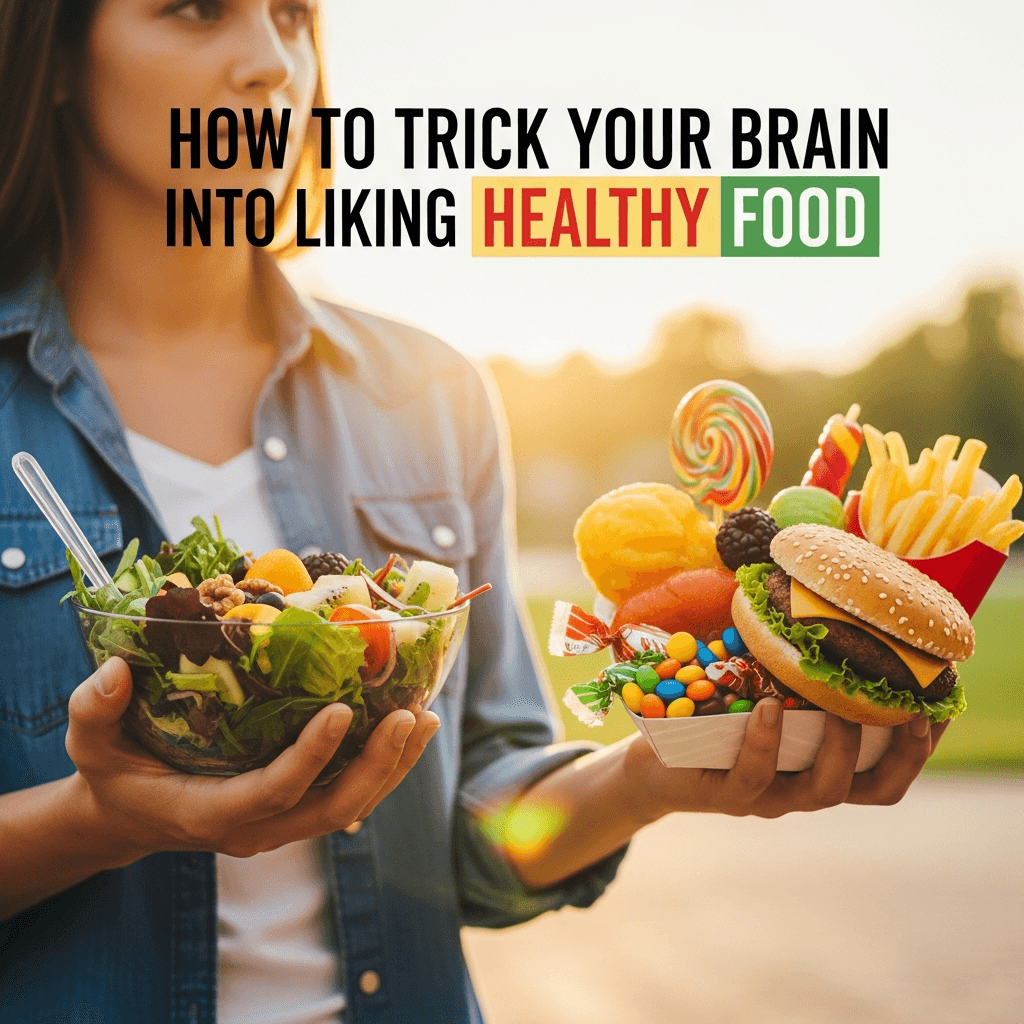
You don’t hate healthy food — your brain just isn’t familiar with it yet.
Taste isn’t only about flavor; it’s about memory, reward, and repetition.
The good news? You can reprogram your brain to crave what’s good for you — no restriction, no guilt, just smart rewiring.
Your Brain Doesn’t Taste — It Remembers
Most of our “food preferences” aren’t genetic — they’re learned.
Neuroscientist Dana Small from Yale University found that our brains link flavor with reward signals.
If your brain associates sweetness or saltiness with comfort or relief, it releases dopamine — the pleasure chemical.
Over time, that reward loop strengthens.
So when you crave fries or chocolate, it’s not your taste buds rebelling — it’s your brain recalling the emotional comfort they’ve delivered before.
Healthy foods simply haven’t built that same emotional connection yet.
The Familiarity Effect
Psychologists call it the mere exposure effect: the more you’re exposed to something, the more you tend to like it.
This applies to people, music — and food.
A study in the journal Appetite showed that repeated exposure to vegetables (even without forcing yourself to like them) gradually increases preference.
Translation: the more often you eat something healthy, the more your brain starts to treat it as “normal,” and then — as “pleasant.”
Consistency, not willpower, changes your cravings.
The Reward Swap Trick
Your brain loves patterns of reward. So, instead of fighting your cravings — redirect them.
Here’s how it works:
- Pair healthy foods with positive context. Eat them when you’re in a good mood or after something enjoyable (like a walk or your favorite song).
- Layer flavors gradually. Add a little salt, spice, or healthy fat (like olive oil) to make nutrient-dense foods more palatable.
- End meals with a natural sweetness. Fresh fruit or dark chocolate teaches your brain that “healthy” can still mean “satisfying.”
Over time, your brain will start associating these foods with the same pleasure signals it used to reserve for junk food.
Your Microbiome Joins the Game
Here’s the wild part: your gut bacteria influence what you crave.
When you eat more processed food, you feed microbes that want more of it.
But as you shift your diet — even slightly — your microbiome changes, sending new craving signals to your brain.
Dr. Emeran Mayer, author of The Mind-Gut Connection, explains it simply:
“The microbes in your gut talk to your brain constantly — and what you feed them shapes what they ask for.”
So yes, your gut literally learns to prefer the foods you give it most.
The “Gradual Shift” Formula
You don’t need to overhaul your diet overnight. You just need to teach your brain, one small cue at a time.
- Add, don’t remove. Start by adding one healthy element to every meal.
- Repeat exposure. Eat the same nutrient-dense foods several times a week.
- Stack rewards. Pair healthy choices with positive emotion — not guilt or pressure.
- Stay patient. It takes about 10–15 exposures for your taste buds and brain to sync.
Before long, the cravings start shifting — not through force, but through familiarity.
Closing Thoughts
Healthy eating isn’t about discipline — it’s about design.
You can literally train your taste buds and rewire your reward system to prefer what serves you best.
So don’t wait to “feel ready” to eat better.
Start teaching your brain what “good” really feels like — one bite, one repetition, one new signal at a time.