
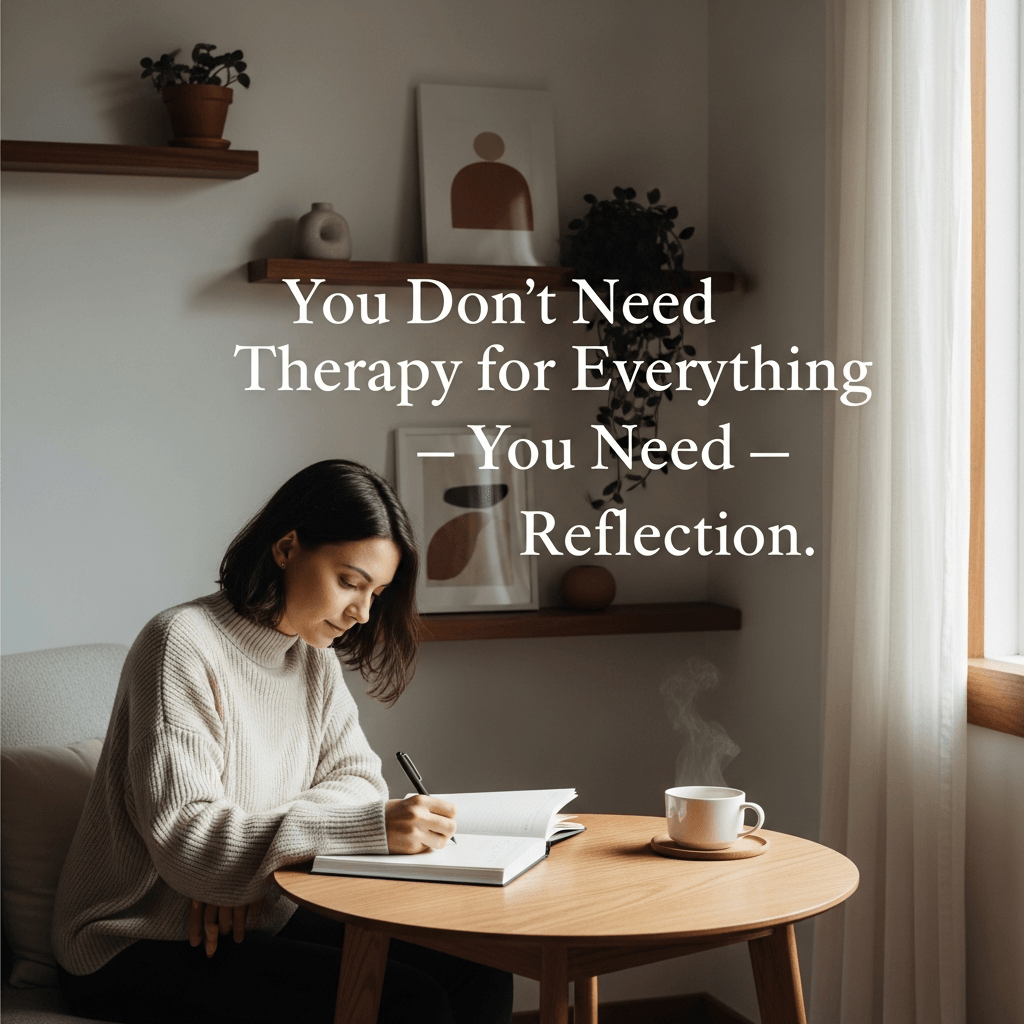
Not every problem needs a therapist — some just need silence, honesty, and a notebook.
In an age where every mood feels medical, we’ve forgotten the power of self-reflection.
Before you book another session, try meeting yourself first.
When Therapy Became the Default
Modern wellness culture often equates healing with therapy. While therapy is powerful — even life-saving — it’s not the only path to understanding yourself.
Psychologist Carl Rogers, one of the founders of humanistic therapy, once said: “The curious paradox is that when I accept myself just as I am, then I can change.”
That kind of acceptance doesn’t always need a professional. Sometimes, it just needs presence.
Sitting quietly. Writing down your thoughts. Asking: What am I actually feeling?
The Lost Art of Reflection
We live in constant noise — podcasts, notifications, advice, and “mental health hacks.”
But reflection isn’t another hack. It’s the slow, honest practice of noticing what’s going on inside you before trying to fix it.
Studies from the University of California show that reflective journaling reduces stress and increases emotional clarity by helping the brain process scattered thoughts into coherent stories.
In short: writing helps you think — and thinking helps you heal.
Reflection is free, always available, and brutally honest. It doesn’t tell you what you want to hear. It tells you what’s true.
Therapy Helps You See — Reflection Helps You Stay
Therapy often shines a light on hidden parts of you. Reflection helps you keep that light on when you’re alone.
It’s not about choosing one over the other. It’s about balancing guided help with personal awareness.
Without reflection, therapy can become dependency — waiting for answers instead of cultivating insight.
With reflection, you strengthen your ability to hold space for your own emotions, even when no one’s watching.
How to Reflect Without Overthinking
Reflection doesn’t mean rumination. It’s not looping your worries. It’s listening without judgment.
Try this structure:
- Name it: “I feel anxious.”
- Ask why: “Because I haven’t stopped moving.”
- Connect it: “I’m afraid stillness means failure.”
That’s reflection — awareness turning into understanding.
Action Plan: The 10-Minute Mirror Practice
- Find a quiet spot — no phone, no music.
- Set a timer for 10 minutes.
- Write freely about what’s been heavy on your mind. No grammar, no structure.
- When time’s up, read one sentence that feels most true — and sit with it for a minute.
Do this daily for a week. You’ll start realizing that you’re not always in need of answers — just attention.


