
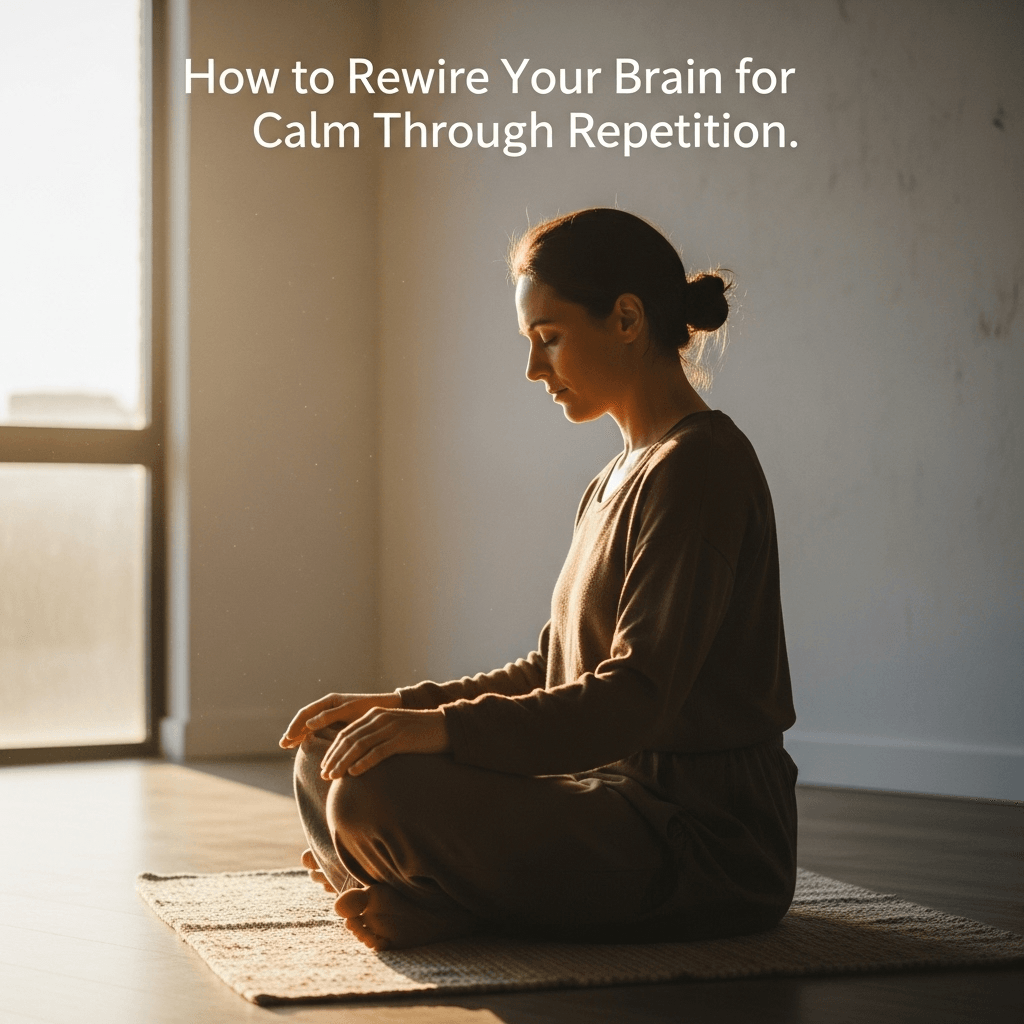
Calm isn’t found; it’s built. Your brain doesn’t automatically know how to stay steady in chaos — it learns. Repetition is the secret. Small, repeated actions can reshape neural pathways, turning stress into focus and anxiety into quiet confidence.
The Neuroscience of Calm
Your brain is plastic — literally. Neuroplasticity means your neural pathways adapt based on repeated experiences. The more you practice calm, the easier it becomes.
Dr. Rick Hanson, author of Hardwiring Happiness, explains:
“What you repeatedly think, feel, or do physically rewires your brain. Your mind learns patterns like any skill.”
This isn’t meditation fluff — it’s biology. Calm is a learned skill, reinforced with practice.
Why Repetition Works
Stress and anxiety fire established neural circuits. To replace them, you need consistent, repeated interventions.
- Consistency strengthens pathways: Each repetition makes the calm response easier next time.
- Small wins compound: Even 30 seconds of intentional breathing daily creates measurable brain changes over weeks.
- Automaticity develops: After enough repetitions, calm becomes the default rather than a choice.
The key isn’t duration — it’s frequency. Short, repeated practices are more effective than rare, intense sessions.
Simple Practices for Neural Rewiring
- Focused Breathing: 4–4–6 inhale-hold-exhale pattern for 1–2 minutes, 3–5 times daily.
- Mindful Pauses: Stop before reacting — notice physical sensations or thoughts. Repeat every day.
- Gratitude Anchors: Name one small thing you’re grateful for each morning and evening. Repetition rewires reward circuits.
- Body Scans: Scan tension points for 60 seconds, release, repeat consistently.
These small, repeated habits shift the brain’s “default” from stress to calm — rewiring neural circuits in measurable ways.
The Science Behind Lasting Change
Research in Nature Neuroscience shows that repeated emotional regulation practices increase prefrontal cortex activity (control) and decrease amygdala reactivity (stress).
Simply put: your brain literally changes to support calm behavior through repetition.
James Clear summarizes:
“Habits are the compound interest of self-improvement. Tiny repeated actions yield massive results over time.”
Calm isn’t magic — it’s the reward of neural training.
Action Guide: Build Calm Daily
- Choose one micro-practice (breathing, gratitude, mindful pause).
- Repeat it at the same times each day for one week.
- Track subtle changes: more patience, less reactivity, steadier energy.
- Gradually layer additional practices — the brain grows stronger with each repetition.
Calm becomes automatic, reliable, and self-reinforcing. Repetition is your brain’s gym.


